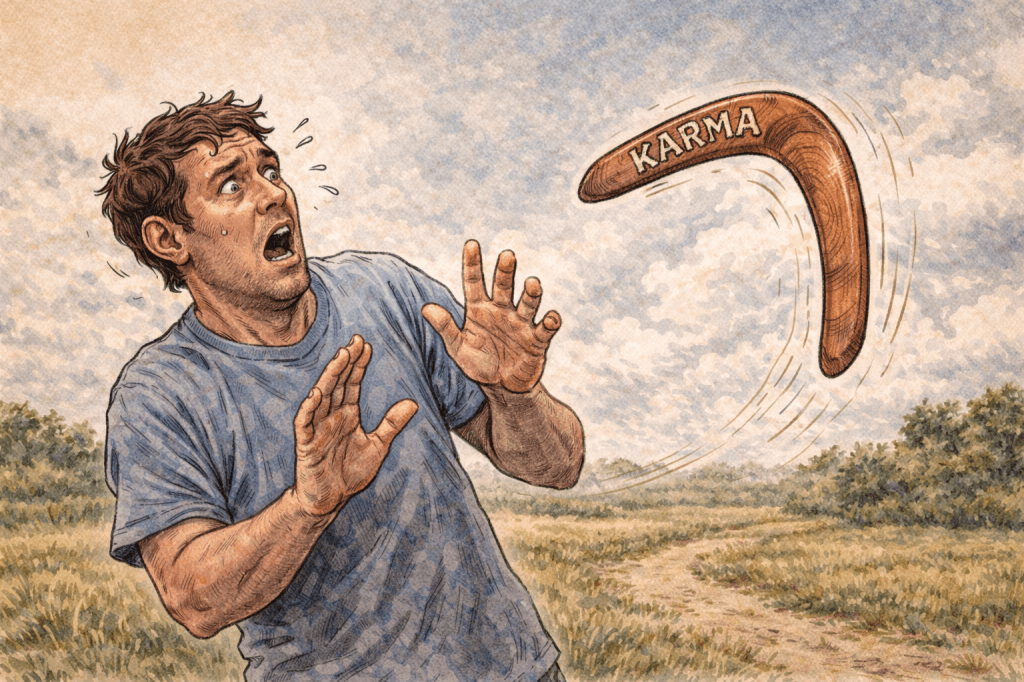
Karma
Originally, the word karma comes from the ancient Sanskrit word karman, which simply means action, deed, work, or that which is done.
At its root, karma did not mean punishment or reward. It meant action — plain and simple.
The Three Forms of Karma
Any intentional action falls into karma. This includes actions that are:
• Mental (thoughts)
• Verbal (words)
• Physical (deeds)
So karma isn’t limited to physical actions. It includes what we think and what we say. The original understanding was that actions lead to effects, and causes lead to results.
Cause and Effect, Not Judgment
Over time, people began to notice patterns.
Helpful actions tended to lead to beneficial results. Harmful actions tended to lead to harmful results. Because of this, karma eventually became labeled as “good karma” or “bad karma.”
But originally, karma itself wasn’t good or bad — it was neutral, like gravity. It works whether you believe in it or not.
How Karma Appears Across Cultures
As people observed karma across different nations and cultures, similar ideas emerged without people consulting one another.
Phrases like:
• “What goes around comes around”
• “You reap what you sow”
• “You get back what you put out”
• “Everything catches up eventually”
All point to the same function and reality that we call karma.
Karma, Belief, and Action
Many people believe in God but struggle with religion due to rules, negative experiences, or beliefs they don’t agree with. Yet many of these same people still believe in karma without attaching it to any religious lens at all.
Those of us who believe in karma understand how powerful it really is — and how our own actions can lift us up or pull us into unpleasant situations or circumstances.
Blessings and Consequences
Karma is always in effect, just like the law of gravity. It is not judgmental and does not require belief or awareness to operate.
You can say whatever you want, but talk without real action means nothing. Karma is based on cause and effect. The more you observe yourself and others, the more clearly you begin to see what kinds of causes lead to what kinds of effects.
A Lesson From Nana
When I was younger and started getting into a life of crime, my nana would tell me that the path I was on only led to three outcomes: jail, hospital, or cemetery.
Even though she never personally traveled that path, she knew people around her who had — and she understood how karma works.
If anything, that was a perfect example of how causes lead to effects when it comes to the laws of karma.
Final Thoughts
Karma is action and consequence. What you do and what you say eventually show up in your life. That’s how the system works.
 Lessons 4 Lyf