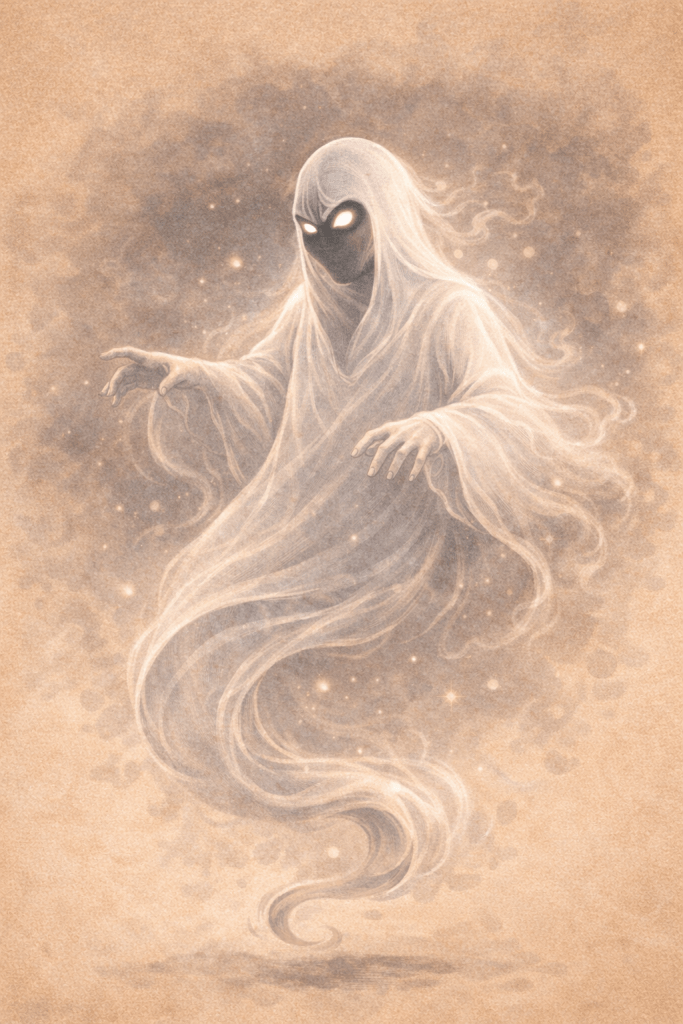
The Origin of the Word “Spirit”
The word spirit comes from the Latin spiritus, meaning breath, life force, or that which animates.
In its original sense, spirit did not necessarily refer to a fixed soul, a permanent inner identity, or something existing independently from cause and effect. It pointed instead to the living process itself — the animating force behind life and experience.
Over time, the word spirit came to mean a permanent inner self. At its most basic level, spirit refers to awareness, vitality, and the continuity of this life force.
The Original State: Pure and Undivided
This life force begins in a pure, undivided state.
You can see this clearly in a newborn baby.
Before fear, trauma, conditioning, or addiction take hold, there is a natural presence — an innocence, a calm awareness, a quiet vitality. When you look into a baby’s eyes before hunger or discomfort arise, you can sense this original state.
This is the spirit in its natural form:
Whole, present, and unburdened.
This is not something we lose — it is something we move away from.
Losing Touch With the Spirit
We are not the body.
We are not the mind.
We are not the many emotions we experience throughout the day.
We are spirits – or what some traditions describe as a life force – having a human experience as we move through this journey called life.
The ego plays a major role in us losing touch with this deeper reality. As fear, pain, and division enter our lives, the mind takes on a survival role. Over time, it can become dominant, consuming our attention and shaping our perception.
Trauma and addiction do not destroy the spirit — they hijack the system.
The mind takes control.
The spirit moves into the background.
The Spirit Beneath the Layers
The spirit does not disappear. It becomes covered.
Driven by fear, habit, and survival patterns, the mind begins to lead while the higher self remains present but pushed into the background. Attention, decision-making, and behavior begin to move on autopilot, guided more by old habits and reactions than by conscious awareness.
Think of the spirit like something important in your house that you need but can’t find. It isn’t gone — it’s buried under clutter. Piece by piece, that clutter must be cleared away.
The clutter is ego, trauma, fear, addiction, and learned behaviors.
When those layers are removed, what remains is what was always there.
Spirit and Spirituality Across Different Traditions
This is why certain religions, philosophies, and ways of life — such as Buddhism — are still considered forms of spirituality. The word spirituality itself contains the word spirit, rooted in this original meaning of life force and animation.
Buddhism acknowledges the continuity of existence, but it approaches it differently than traditions that describe spirit as a fixed, unchanging soul. In Buddhist thought, what many people call a person’s “spirit” or “life force” is understood as something dynamic — capable of change, transformation, and development over the course of a lifetime.
This continuity is not denied. Rather, it is understood as a process.
The Buddha described this continuity as a stream of consciousness — a process shaped by causes and conditions. The question was never whether this life force continues, but whether there is a permanent, unchanging self existing independently of this process.
Final Reflection
The spirit begins whole.
Life introduces division.
The ego takes the lead.
But nothing destroys the spirit.
It never chose the layers that were placed on top of it — and it can be uncovered again. This is what we come from, and this is what many recognize as something familiar and beautiful. For many spiritual paths, the work isn’t about becoming something new, but about returning to a sense of oneness – coming back to what we were before all the traumas, fears, ego, and addictions.
 Lessons 4 Lyf