Symbolism & Alignment

Symbolism

Before religion, philosophy, or spirituality, humans communicated through symbols.

Long before people could read or write, symbols told them where to go, what to avoid, and what to remember. Symbols functioned as guides, warnings, and shared references..

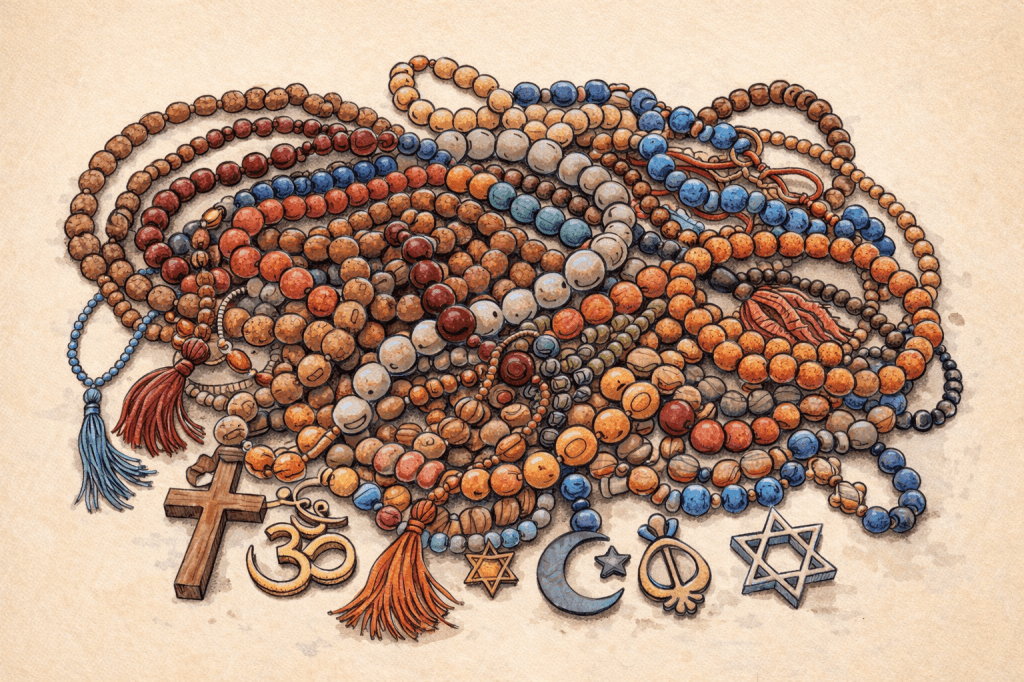
We live in a world full of symbols. Flags, banners, logos, beads, emblems, colors, and images all communicate meaning. These symbols represent identity, values, beliefs, and deeper aspects of our lives.

In a hectic and chaotic world, symbols can act like bookmarks. They bring you back to the page you were on before life interrupted you. They help snap you back into focus.

Certain symbols reinforce what you have learned. They help maintain structure and grounding in a world that is constantly changing and challenging.

Embodiment

Some symbols can be embodied.

Embodiment happens when a symbol stops being something you simply look at. It becomes something you connect with internally and align yourself with.

When embodied, a symbol begins to influence posture, behavior, awareness, and decision-making. This is where symbolism moves from appearance to lived experience.

Example of Embodiment

I have a set of beads called skullhead prayer beads.

I have practiced Buddhism since I was a teenager.

Over time, I noticed that certain Buddhists wear beads around their necks or wrists. Eventually, I decided to incorporate beads into my own practice. For reasons I couldn’t explain at the time, I felt drawn to skullhead prayer beads.

Being from the West and not growing up around Buddhist priests or temples, I researched these beads on my own. I looked into articles, blogs, and writings to understand what they symbolized.

Based on this information, I made my own interpretation of what these beads represented.

Meaning & Interpretation

I learned that these beads were used for protection.

They were traditionally made from animal bone or skull. This symbolized animals that once provided service to humans in ancient times. It encouraged servicing others in the same way animals once serviced us.

The beads also represented life, death, and everything in between. Life representing creation and death representing destruction.

As I continued researching, I found that these beads were associated with compassion, empathy, protection, service, and impermanence.

This was my interpretation based on the information I found and personal reflection.

Embodying the Symbol

I began to wear the beads daily.

Over time I embodied these beads and the qualities they represented.

The first thing I noticed was my posture became straiter and I became more aware of my surroundings.

I began viewing life and death, positive and destructive forces, for what they really are.

Eventually, I became the beads..

This may sound strange, but it is the best way I can describe true embodiment.

Symbolism Through Words

Symbolism comes in many forms. Some images, icons, and objects carry meaning. Certain words also carry power.

Spoken or chanted phrases, sacred syllables, or repeated words with meaning can also be a form of symbolism, embodiment, or alignment

These verbal symbols function the same way visual symbols do.

They can snap you back into focus or reinforce alignment.

Symbols As Tools

Symbols can be used as tools to help guide you through life.

They can support you mentally, emotionally, and spiritually.

When you embody a symbol, you become more aligned with what it represents to you.

If the symbol is healthy, constructive, or uplifting, this alignment can raise consciousness to a higher level and improve the overall quality of your life.
Spirit

The Origin of the Word “Spirit”

The word spirit comes from the Latin spiritus, meaning breath, life force, or that which animates.

In its original sense, spirit did not necessarily refer to a fixed soul, a permanent inner identity, or something existing independently from cause and effect. It pointed instead to the living process itself — the animating force behind life and experience.

Over time, the word spirit came to mean a permanent inner self. At its most basic level, spirit refers to awareness, vitality, and the continuity of this life force.

The Original State: Pure and Undivided

This life force begins in a pure, undivided state.

You can see this clearly in a newborn baby.

Before fear, trauma, conditioning, or addiction take hold, there is a natural presence — an innocence, a calm awareness, a quiet vitality. When you look into a baby’s eyes before hunger or discomfort arise, you can sense this original state.

This is the spirit in its natural form:

Whole, present, and unburdened.

This is not something we lose — it is something we move away from.

Losing Touch With the Spirit

We are not the body.

We are not the mind.

We are not the many emotions we experience throughout the day.

We are spirits – or what some traditions describe as a life force – having a human experience as we move through this journey called life.

The ego plays a major role in us losing touch with this deeper reality. As fear, pain, and division enter our lives, the mind takes on a survival role. Over time, it can become dominant, consuming our attention and shaping our perception.

Trauma and addiction do not destroy the spirit — they hijack the system.

The mind takes control.

The spirit moves into the background.

The Spirit Beneath the Layers

The spirit does not disappear. It becomes covered.

Driven by fear, habit, and survival patterns, the mind begins to lead while the higher self remains present but pushed into the background. Attention, decision-making, and behavior begin to move on autopilot, guided more by old habits and reactions than by conscious awareness.

Think of the spirit like something important in your house that you need but can’t find. It isn’t gone — it’s buried under clutter. Piece by piece, that clutter must be cleared away.

The clutter is ego, trauma, fear, addiction, and learned behaviors.

When those layers are removed, what remains is what was always there.

Spirit and Spirituality Across Different Traditions

This is why certain religions, philosophies, and ways of life — such as Buddhism — are still considered forms of spirituality. The word spirituality itself contains the word spirit, rooted in this original meaning of life force and animation.

Buddhism acknowledges the continuity of existence, but it approaches it differently than traditions that describe spirit as a fixed, unchanging soul. In Buddhist thought, what many people call a person’s “spirit” or “life force” is understood as something dynamic — capable of change, transformation, and development over the course of a lifetime.

This continuity is not denied. Rather, it is understood as a process.

The Buddha described this continuity as a stream of consciousness — a process shaped by causes and conditions. The question was never whether this life force continues, but whether there is a permanent, unchanging self existing independently of this process.

Final Reflection

The spirit begins whole.

Life introduces division.

The ego takes the lead.

But nothing destroys the spirit.

It never chose the layers that were placed on top of it — and it can be uncovered again. This is what we come from, and this is what many recognize as something familiar and beautiful. For many spiritual paths, the work isn’t about becoming something new, but about returning to a sense of oneness – coming back to what we were before all the traumas, fears, ego, and addictions.

Karma

Karma

Originally, the word karma comes from the ancient Sanskrit word karman, which simply means action, deed, work, or that which is done.

At its root, karma did not mean punishment or reward. It meant action — plain and simple.

The Three Forms of Karma

Any intentional action falls into karma. This includes actions that are:

• Mental (thoughts)

• Verbal (words)

• Physical (deeds)

So karma isn’t limited to physical actions. It includes what we think and what we say. The original understanding was that actions lead to effects, and causes lead to results.

Cause and Effect, Not Judgment

Over time, people began to notice patterns.

Helpful actions tended to lead to beneficial results. Harmful actions tended to lead to harmful results. Because of this, karma eventually became labeled as “good karma” or “bad karma.”

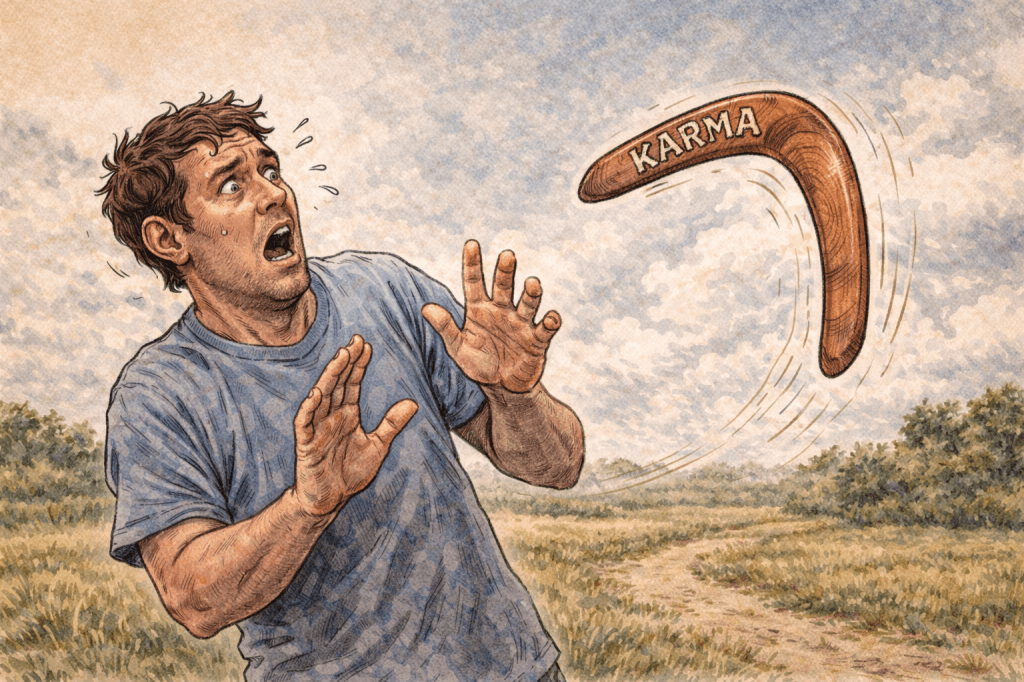
But originally, karma itself wasn’t good or bad — it was neutral, like gravity. It works whether you believe in it or not.

How Karma Appears Across Cultures

As people observed karma across different nations and cultures, similar ideas emerged without people consulting one another.

Phrases like:

• “What goes around comes around”

• “You reap what you sow”

• “You get back what you put out”

• “Everything catches up eventually”

All point to the same function and reality that we call karma.

Karma, Belief, and Action

Many people believe in God but struggle with religion due to rules or beliefs they don’t agree with. Many of these people still believe in karma without attaching it to any religious lens at all.

Those of us who believe in karma understand how powerful it really is — and how our own actions can lift us up or pull us into unpleasant situations or circumstances.

Blessings and Consequences

Karma is always in effect, just like the law of gravity. It is not judgmental and does not require belief or awareness to operate.

You can say whatever you want, but talk without real action means nothing. Karma is based on cause and effect. The more you observe yourself and others, the more clearly you begin to see what kinds of causes lead to what kinds of effects.

A Lesson From Nana

When I was younger and started getting into a life of crime, my nana would tell me that the path I was on only led to three outcomes: jail, hospital, or cemetery.

Even though she never personally traveled that path, she knew people around her who had — and she understood how karma works.

If anything, that was a perfect example of how causes lead to effects when it comes to the laws of karma.

Final Thoughts

Karma is action and consequence. What you do and what you say eventually show up in your life. That’s how the system works.

The Divine

What I Mean by “The Divine”

When I say the divine, I’m not talking about one religion, one specific god, or one belief system. I’m pointing to the same reality that different traditions have described in different ways throughout history.

Whether people call it God, the universe, the cosmos, natural law, a higher power, Allah, Buddha nature, karma, Brahman, higher consciousness, or something else, I’m referring to the same ultimate reality that governs all living beings in the universe.

The word divine itself comes from older languages meaning “of the sacred” or “of the source.” I’m not using it to elevate one belief system over another. I’m using it as an umbrella term — a way to speak about what all these traditions are pointing toward.

Blessings and Consequences

When it comes to the divine, there are certain aspects that most people can agree on. One of them is that the divine plays a role in what we experience as blessings and consequences.

Alignment with the divine — however you understand it — tends to lead to blessings. When we go against natural order, truth, or moral direction, we experience consequences. This doesn’t require religious agreement; it shows up in everyday life.

We also tend to associate the divine with good or righteous thoughts, words, and actions. Nobody thinks of the divine as something wicked or destructive — something that spreads evil or chaos. Most of us instinctively associate the divine with qualities like morality, love, compassion, and justice.

Empathy, Justice, and Human Goodness

When you align yourself with the divine, you begin to experience a higher level of human qualities and tendencies. You start getting in touch with the more positive, righteous side that we all carry within us – positive meaning what brings you up, and negative meaning what brings you down.

This side of us can lead to blessings not only for ourselves, but for others as well. It can ease suffering, spread relief, and bring happiness to people who are in need of help, inspiration, or motivation.

Many believe that we come from the divine — that we begin life aligned with it — and that somewhere along the way, we stray.

How We Lose Our Way

We drift from our original path and get caught up in unaligned factors such as ego, trauma, addiction, fear, and certain learned behaviors.

Whether you see the divine as something outside of you, inside of you, or both, alignment still matters. You can benefit from living in harmony with it and from embodying it through your actions and tendencies.

Why Alignment Matters

Everybody wants blessings in their life. Nobody enjoys enduring consequences.

This is why embodying or aligning yourself with what you call the divine, regardless of the name you use, is so important. For us to prosper and live more pleasant, meaningful lives, we have to move in alignment rather than fall into chaos.

We currently live in a society where many people are suffering, feeding into negativity, and unintentionally creating unpleasant situations for themselves and others. Reconnecting with higher principles — empathy, integrity, compassion, respect, and other related principles — is not just spiritual; it shows up physically and in everyday life.

Final Thought

The divine isn’t about labels, titles, status, or names. It’s about how we live, how we treat others, and how aligned we are with truth, integrity, and our own spirituality.

Call it what you want — just be about it.

Dharma

Dharma

Dharma is a word that existed before organized religion. It did not begin as a belief system, a doctrine, or a set of rules created by temples or institutions.

Dharma began as a way to describe the natural order or laws that holds life together. It was observed, not invented.

It emerged from Vedic sages who carefully observed nature, seasonal cycles, and human behavior, describing how life maintains balance through cause and effect rather than collapsing into disorder.

The Origins of Dharma

The concept of Dharma originated in ancient Vedic culture over 3,500 years ago. It was understood as describing the structure of reality itself.

Dharma referred to the natural order of life and truth. It described how things function in balance as they are meant to.

The Original Meaning of Dharma

The word Dharma comes from the Sanskrit root dhṛ, which means “to hold,” “to support,” or “to maintain.”

In its original sense, Dharma referred to that which holds things together. It can be compared to the beams in a building.

If those beams are removed, the entire structure collapses. Dharma was understood as the invisible support system of life.

Dharma Before Religion

Before religion, Dharma simply meant the way things are designed to work.

It pointed to the natural order and the principles that prevent chaos. Dharma described how life stays in balanced on its own, rather than from control or force.

It was closer to natural law than belief. It explained why things either function or fall apart.

Dharma Explained in Real Life

Dharma can be understood clearly by looking at everyday life.

If everyone in a neighborhood decided to rob and steal from one another, it would be chaos. Stores would close, police would flood the streets, and people would get hurt.

Society would begin to collapse, not because of punishment or morality, but because the structure holding it together had been destroyed.

On the other hand, when people move with some level of structure, life functions. People mind their business, respect boundaries, and avoid unnecessary violations.

Society remains stable, and people are able to live and prosper. That state of balance and functionality is Dharma.

What Dharma Is and Isn’t

Dharma is not about being nice. It is not about appearing holy or morally superior. But at the same time morality can lead to righteous actions that uphold structure and prevent disfunction, destruction, and suffering.

Dharma is about not moving in a way that destroys everything around you, including your own life.

When you understand what holds things together, you naturally begin to move with more responsibility for yourself. You act with restraint, awareness, and clarity because you understand the consequences.

When you fully realize the suffering that comes along with these consequences, you start to understand how important dharma is – and how, with out it, we are exposed to the hardship, struggle, and forms of wickedness that reveal themselves in various ways.

Adharma: The Opposite of Dharma

Alongside Dharma, another word emerged: Adharma.

Adharma refers to actions and behaviors that break things down, create decay, and lead to chaos.

It describes recklessness and patterns that pull things out of balance instead of supporting it. Adharma is what causes things to fall apart when left unchecked.

How the Meaning Evolved

Originally, Dharma and Adharma were not about right and wrong. They were observations of cause and effect.

Over time, as societies evolved, Dharma became associated with righteous or right action. Adharma became associated with unrighteous or destructive action.

As people, we naturally personalize our experiences, so what was once an impersonal law evolved into something we could relate to as good or right action or wicked or wrong action. Either way you look at it, both lenses lead to the same destination.

The Core Understanding

At its core, Dharma is not about religion. It is about understanding what holds life together and choosing not to act against it.

When you move in alignment with what supports order, life remains stable. When you move against it, things begin to break.

At its root, Dharma is the natural law of how life works.

Recognizing it is up to us, but it operates whether we acknowledge it or not.